Vice City is easy to recognize and surprisingly easy to mislabel. Fans can identify beaches, towers, causeways and nightlife from a few frames, but Rockstar has officially named only a small set of city areas. The useful guide is therefore not the one with the longest speculative landmark list; it is the one that shows exactly where published geography ends and visual interpretation begins.
Rockstar describes Vice City as a concentrated expression of American glamour, ambition and greed. Its official profile then moves through four different urban layers: Ocean Beach, Little Cuba, the Tisha-Wocka flea market and VC Port. Together they reveal more about the intended city than a guessed block count could.
Every Officially Named Vice City Area
Ocean Beach
Rockstar connects Ocean Beach with pastel art deco hotels and bright white sand.
Why it matters: This is the clearest officially named expression of classic Vice City: tourism, nightlife, beachfront traffic and high-visibility public space.
Do not assume: Ocean Drive is not the name used in Rockstar's current GTA VI region profile, and no hotel interior or property system is confirmed by the description alone.
Little Cuba
Rockstar specifically highlights the neighborhood's busy panaderías, establishing a lived-in cultural district rather than a generic city block.
Why it matters: The reference implies street-level commerce, food businesses and a neighborhood identity distinct from the beachfront and financial skyline.
Do not assume: No gang territory, safehouse, mission chain or exact boundary has been published.
Tisha-Wocka flea market
The city profile names a flea market associated with bootleg brands.
Why it matters: This is unusually specific world-building. It points toward parody retail culture and informal commerce without requiring an invented shop catalogue.
Do not assume: Rockstar has not said whether every stall is enterable, whether counterfeit goods are purchasable or whether the market has dedicated missions.
VC Port
Rockstar calls VC Port the cruise-ship capital of the world.
Why it matters: The wording establishes a passenger and tourism identity. It should not be confused with fan claims that make Port Gellhorn Leonida's main container terminal.
Do not assume: Cruise access, ship interiors, port jobs and smuggling mechanics remain unannounced.
The Four Urban Layers Rockstar Is Building
The named areas are valuable because they are not four versions of the same tourist district. Ocean Beach represents the postcard city. Little Cuba establishes a neighborhood shaped by local business and culture. Tisha-Wocka brings parody brands and informal retail into the foreground. VC Port connects the city to cruise tourism and large-scale movement of people.
That contrast suggests a city designed around social and economic transitions: visitors and service workers, polished hotels and counterfeit stalls, nightlife promotion and neighborhood routine. It is reasonable to expect those environments to feel different. It is not yet reasonable to assign each one a crime economy, wanted-level behavior or property market that Rockstar has never described.
Postcard Vice City
Beachfront hotels, white sand, nightlife imagery and a high concentration of visitors.
Everyday Vice City
Bakeries, local streets, small businesses and communities that exist beyond the tourism campaign.
Hustle Vice City
Bootleg brands, music promotion, social visibility and the city's informal commercial layer.
Gateway Vice City
Cruise traffic, waterfront infrastructure and movement between the city and wider Leonida.
Characters Connected to the City
Rockstar's character profiles give Vice City a working cultural network. Boobie Ike turned street experience into real estate, the Jack of Hearts club and a recording studio. Dre'Quan Priest uses that club as a route into the music business through Only Raw Records. Real Dimez arrive with a prior local hit and a social-media strategy. These are explicit relationships, not generic background lore.
The information establishes venues, careers and pressure points that can support the story. It does not confirm a player-managed record label, passive nightclub income, chart simulation or social-media reputation meter. Read the verified character guide for Rockstar's complete published biographies.
What Official Screenshots Show Without Naming
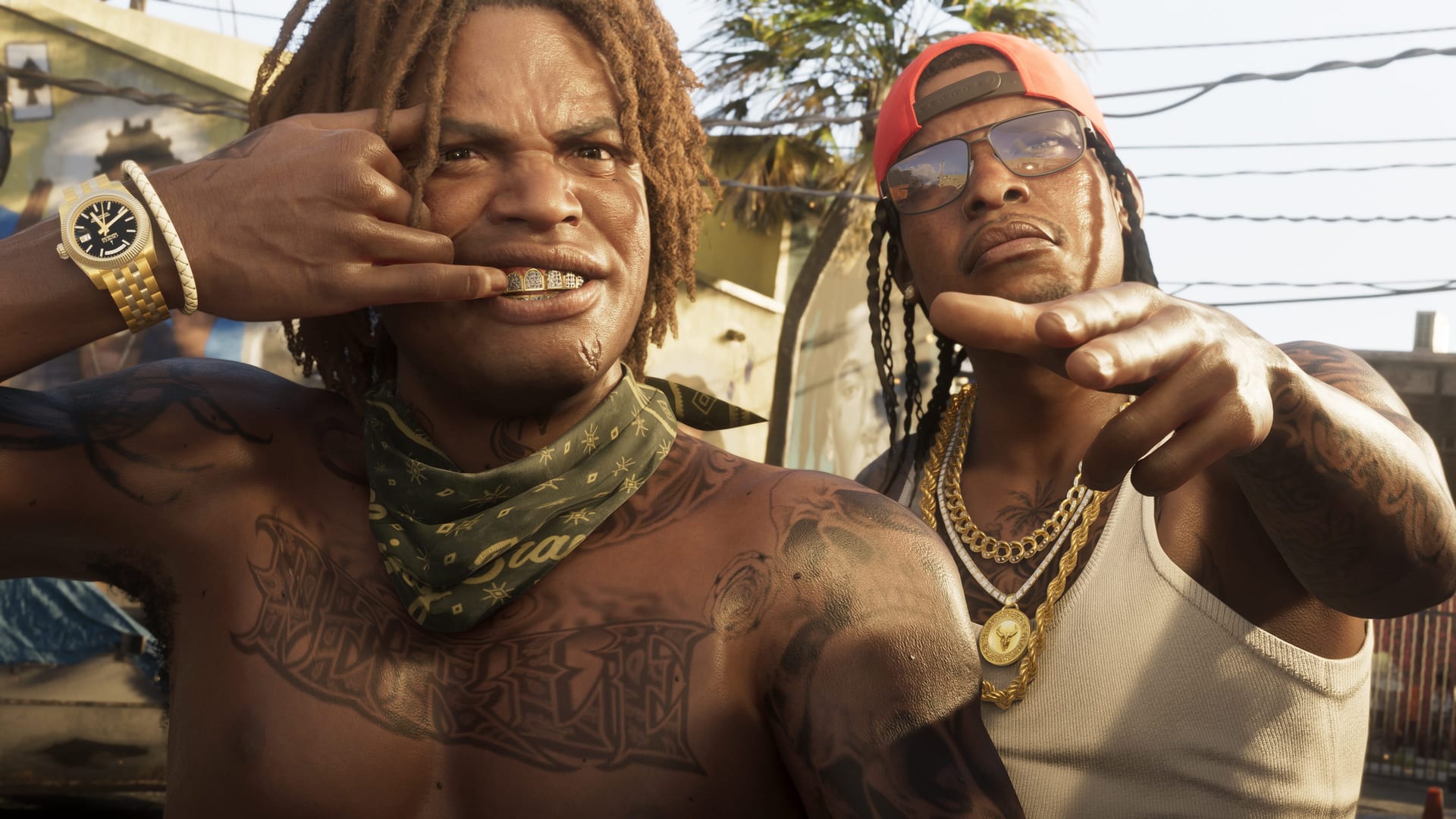
Rockstar's Vice City gallery shows dense towers, multilane roads, waterways, nightlife interiors, beaches, residential streets and a marina environment. Those elements are safe visual observations. A screenshot can prove that a type of place exists; it cannot prove its fan-assigned name, exact location, ownership rules or gameplay function.
Vice City FAQ
What Vice City neighborhoods are officially confirmed for GTA 6?
Rockstar's current city profile names Ocean Beach, Little Cuba, the Tisha-Wocka flea market and VC Port. Other labels should be treated as visual observations or community identifications unless Rockstar names them.
Is Ocean Drive confirmed in GTA 6?
Rockstar's official GTA VI region copy uses Ocean Beach. Fans may use Ocean Drive by analogy with earlier Vice City games or visible beachfront streets, but that does not make it the published GTA VI place name.
Can players enter every building in Vice City?
Rockstar has not published an interior count or said every building is enterable. Visible lobbies, stores and venues confirm individual spaces, not universal access.
Is Port Gellhorn part of Vice City?
Rockstar presents Port Gellhorn as its own Leonida region with a forgotten-coast identity. VC Port is the named cruise-ship area inside the Vice City profile.
Has Rockstar released a Vice City street map?
No official street map, district boundary map or transit diagram is available. Current knowledge comes from named places, screenshots and video observations.
Continue with the verified Leonida map hub, compare all environments in the six-region guide, or examine what the available material can and cannot tell us in the map-size fact check.