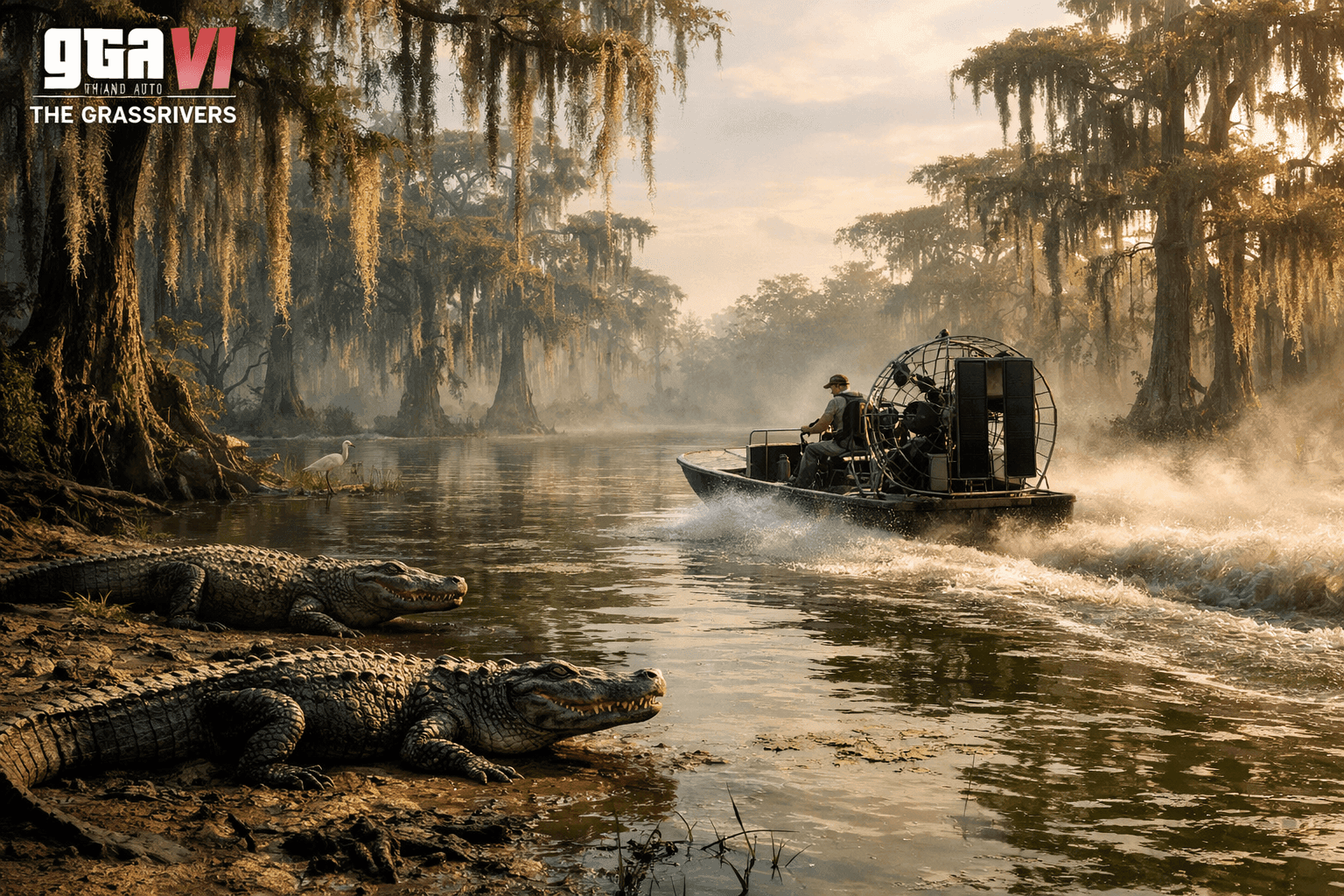
Rockstar Games has always pushed boundaries with environmental simulation, but GTA 6 takes it to an entirely new level. Set in the subtropical state of Leonida — a fictionalized Florida — the game's weather system isn't just cosmetic. It's a fully integrated gameplay mechanic that reshapes how you interact with the open world in real time.
Dynamic Weather Engine
Built on the RAGE 9 engine's new atmospheric simulation layer, GTA 6's weather system models real meteorological patterns. Storms don't just appear and disappear — they form over the ocean, build intensity, track across the map, and dissipate naturally. You can watch a tropical depression develop on the horizon and know that within 10-15 minutes of real time, it will make landfall.
The system includes over 15 distinct weather states, ranging from clear skies and light fog to torrential downpours, electrical storms, and full-scale hurricanes. Transitions between states are seamless — there's no loading screen or abrupt change. Clouds build gradually, humidity rises, and the atmosphere shifts in a way that feels genuinely organic.
Hurricanes — The Headline Feature
The most talked-about weather feature is the hurricane system. Rockstar confirmed that hurricanes serve as major dynamic events that fundamentally alter the game world:
- ▸Map Transformation: Streets flood, trees fall, power lines come down, and entire neighborhoods become temporarily inaccessible. The destruction is not pre-scripted — it's procedurally generated each time.
- ▸Gameplay Opportunities: During hurricanes, security systems fail, police response times increase dramatically, and certain heist-style missions become available only during storm events.
- ▸NPC Reactions: Citizens evacuate, board up windows, and seek shelter. Emergency services deploy. The entire city shifts into crisis mode with unique ambient dialogue and behaviors.
- ▸Recovery Phase: After a hurricane passes, the world enters a recovery state. Debris litters streets, cleanup crews work, and the economy temporarily shifts — creating opportunities for both legitimate and criminal enterprise.
How Weather Affects Gameplay
Unlike previous GTA titles where rain was mostly visual, GTA 6's weather has mechanical consequences across every system:
Driving Physics
Wet roads reduce tire grip by up to 40%. Hydroplaning is possible at high speeds. Flooding creates water depth that can stall engines. Visibility drops significantly in heavy rain, making high-speed chases more dangerous.
Combat & Stealth
Thunder masks gunshot sounds. Heavy rain reduces NPC detection range by approximately 30%. Lightning strikes can temporarily blind both the player and enemies. Fog provides natural concealment for stealth approaches.
Law Enforcement
Police helicopters cannot fly in severe storms. Response times increase during heavy weather. Roadblocks are less effective on flooded streets. The wanted system becomes more forgiving during extreme conditions.
Economy & Activities
Certain businesses close during storms. Insurance fraud missions become available after hurricanes. Fishing yields change based on weather patterns. Some rare wildlife only appears during specific weather conditions.
The Day/Night Cycle
GTA 6 uses a 48-minute real-time day/night cycle — the same duration as GTA V. However, the visual fidelity has increased exponentially. Sunrises and sunsets feature volumetric cloud lighting with accurate color scattering. The "golden hour" in Leonida is genuinely stunning, with warm light casting long shadows across Vice City's art deco architecture.
Night brings its own atmosphere. Vice City's neon signs reflect off wet pavement after rain. The Grassrivers region becomes eerily dark with only moonlight and fireflies for illumination. Light pollution from the city creates a realistic glow on the horizon when viewed from rural areas.
Regional Weather Variation
Leonida's diverse geography means weather isn't uniform across the map:
- ▸Vice City (Coastal Urban): Sea breezes, afternoon thunderstorms typical of subtropical climates, occasional waterspouts visible offshore.
- ▸The Grassrivers (Swampland): Persistent humidity, morning fog that burns off by midday, intense afternoon heat haze, and more frequent lightning storms.
- ▸Mount Kalaga (Elevated): Cooler temperatures, cloud cover that sits below the peak, clearer skies at altitude, and dramatic storm views from above.
- ▸The Keys (Islands): Constant ocean wind, rapid weather changes, and the most direct exposure to incoming hurricanes.
Technical Achievement
From a technical standpoint, GTA 6's weather system represents a generational leap. Key technologies include:
- ▸Volumetric Cloud Rendering: Real-time 3D clouds that cast accurate shadows on the ground and interact with lighting dynamically.
- ▸Fluid Dynamics for Water: Flooding uses simplified fluid simulation rather than pre-baked water levels, meaning water flows realistically through streets and accumulates in low-lying areas.
- ▸Particle Systems: Rain, hail, and debris during storms use GPU-accelerated particle systems with collision detection — rain bounces off surfaces realistically.
- ▸Global Illumination Updates: The lighting system recalculates in real time as cloud cover changes, meaning indoor spaces dynamically brighten and darken as clouds pass overhead.
What This Means for Players
The weather system in GTA 6 isn't just a visual showcase — it's a strategic layer. Planning a heist? Check the weather forecast. A hurricane means fewer cops but more dangerous driving conditions. Need to escape a wanted level? A thunderstorm might be your best friend. Want to explore the Grassrivers? Morning fog provides cover but also hides predators.
Rockstar has created a world where the environment is as much a character as Jason and Lucia. The weather doesn't just change how Leonida looks — it changes how you play.